
FAQ
Have a question?
We have answers.
Welcome to our FAQ section, what would you like help with? View all the questions or select a topic below to find answers to your most pressing questions about the Food Scraps Pickup Program.
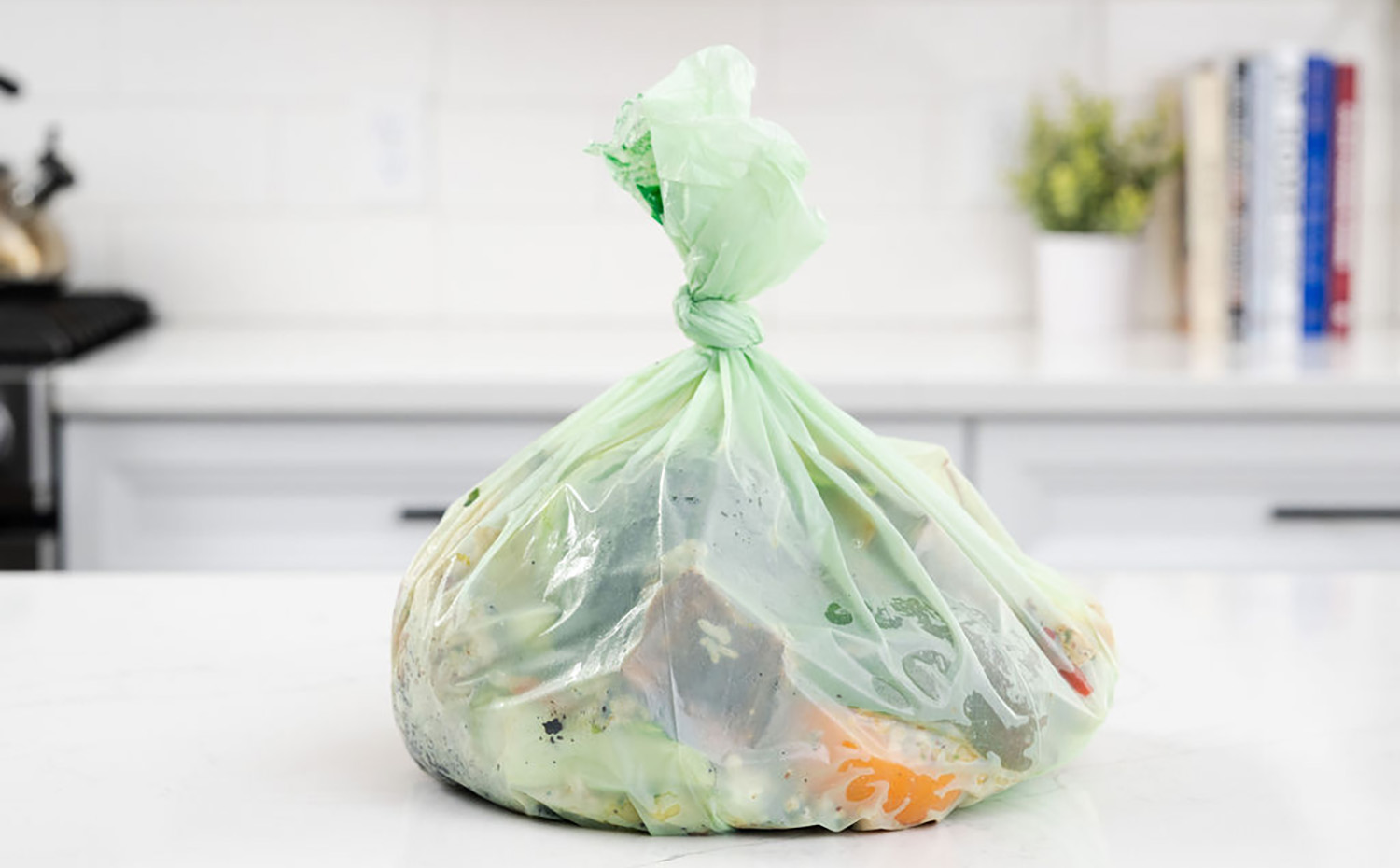
The Food Scraps Pickup Program is a free, voluntary food scrap recycling program for Ramsey and Washington County residents. The program is rolling out to residents of Ramsey and Washington counties over multiple years and will eventually be available to all residents of the two counties. See if you are currently eligible to participate.
Food scraps are collected using special bags called “food scrap bags,” that are provided by the program. The food scrap bags are then placed in your trash cart or dumpster for collection.
After collection, the food scrap bags are separated from trash using robotic sorting technology and turned into nutrient-rich soil called “compost.”
Food scraps make up about 20% of trash by weight collected in Ramsey and Washington counties. The Food Scraps Pickup Program turns collected food scraps back into soil, rather than waste.
Food that goes uneaten wastes money and resources, and negatively impacts the environment. Outside of food scrap recycling and composting, reducing food waste is the environmentally preferred strategy for waste management. Learn more about food waste reduction.
The Food Scraps Pickup Program provides residents with program-specific bags called “food scrap bags.” With this system, food scrap bags and bags of trash all go in the same trash cart, trash chute or dumpster. Food scrap bags are a more efficient and cost-effective method of collecting food scraps from Ramsey and Washington County residents’ homes because:
- According to the counties’ analysis, a system using food scrap bags costs ten times less than a system that uses separate collection carts.
- Food scrap bags do not require additional collection days, collection carts or hauling trucks.
- Using food scrap bags instead of a separate cart system reduces the number of collection trucks on the road resulting in fewer greenhouse gas emissions.
- Food scrap bags allow all residents to participate, regardless of their housing type, city or hauler.
Your trash hauler will pick up your trash with the food scrap bags on your regular collection day.
The trash and food scrap bags are then brought to the Ramsey/Washington Recycling & Energy Center (R&E) in Newport or a transfer station, where the food scrap bags are separated from your trash by machinery that is programmed to recognize and separate the bags. Only residents in eligible communities will have their food scrap bags separated from the trash.
The food scrap bags and their contents are then sent to an industrial composting facility and turned into nutrient-rich soil called “compost.” View the “What happens after food scrap bags are collected?” video to see how the process works.
You can also learn more more about the benefits of food scrap recycling and compost on the R&E compost education page.
Food scrap bags provided by the Food Scraps Pickup Program are specifically designed for this program. These bags are different than the ones offered at county food scrap drop-off sites and those currently sold at retailers or online. The bags are about three times as thick as a grocery store plastic bag and meet special standards for strength. The counties have tested the bags in actual loads of garbage to ensure they don’t break during transit. Only the program-provided food scrap bags can be collected and separated from the trash, other compostable bags will not work for this program.
Robotic sorting technology is used to identify and separate the program-specific food scrap bags from the trash. View the “What happens after food scrap bags are collected?” video to see how the process works.
Ramsey and Washington counties are funding parts of this program with funds from the County Environmental Charge (CEC) that each county collects. This service charge is included on your waste collection bill and funds both counties’ waste programs.
At the R&E Center, tipping fees reflect the costs of processing waste at the facility. R&E uses these funds to cover the costs associated with operating the facility, including labor, equipment, transporting and marketing recyclables and refuse-derived fuel, maintenance, and insurance.
The improvements at the Ramsey/Washington Recycling & Energy Center to separate food scrap bags from the trash for composting are funded by a grant from the Minnesota Pollution Control Agency (MPCA), which was part of the 2020 Minnesota State bonding bill. Facility improvements are also funded by the fee that trash haulers pay to deliver trash to the R&E Center.
Yes. The Food Scraps Pickup Program will be one part of a larger system for collecting food scraps. You may prefer the drop-off sites or backyard composting – do what works best for you! Find more information about your county’s food scraps drop-off sites below:
Not at this time. Ramsey and Washington counties are exploring the possibility of expanding this program to businesses.
When we say “businesses” we mean private, non-profit and public businesses and organizations physically located in Ramsey or Washington County. This includes, but is not limited to, restaurants, grocery stores, catering operations, hotels, office buildings and schools.
For business recycling resources, connect with BizRecycling at BizRecycling.com, 651-768-6670 or info@BizRecycling.com
If you operate a business from a residential address, you may participate in the Food Scraps Pickup Program if it is available in that community.
To get started, order your free supply of food scrap bags. Sign up or call customer support at 651-661-9393 for assistance. The program-specific bags will arrive by mail with instructions on how to start collecting your food scraps.
Only residents in eligible communities can participate. See if the program is currently available in your area.
The timeline of the program rollout is determined by working closely with our facilities and partners to plan for continued expansion. The Food Scraps Pickup Program is in the process of rolling out to all Ramsey and Washington county residents, regardless of housing type, and will be available to all residents of the two counties by the end of 2027. Click here for a list of communities where the program is currently available.
The program is currently available to all communities whose trash is brought directly to the R&E Center or Walter’s Recycling & Refuse transfer station in Blaine, where food scrap bags are separated from the trash by machinery that is programmed to recognize and separate the food scrap bags. The program will become available to the remaining Ramsey County communities when equipment to sort food scrap bags from the trash is installed at the Waste Management transfer station in St. Paul. This construction will be completed by the end of 2027.
Program participation is FREE to residents of Ramsey and Washington counties. All participants can place up to two free orders of 60 food scrap bags per calendar year. Additional food scrap bags are available for purchase.
You can order them by clicking here or call 651-661-9393 (multi-lingual options available) to get started. Food scrap bags are shipped directly to your household.
You can place two free orders of 60 food scrap bags in a calendar year. For most households, we recommend using 1-2 food scrap bags per week to make the most of your free annual supply. Additional food scrap bags are available for purchase.
Food scrap bags come in two sizes:
- 6-gallon (about the size of a bathroom trash can)
- 13-gallon (about the size of a kitchen trash can)
In program testing, the smaller food scrap bag size (6-gallon) was the preferred size for most households. Consider the following factors in deciding which bag size will work best for you:
- Storage: What size container do you plan to use with the food scrap bags? The 6-gallon food scrap bags work better with smaller containers. See ideas for home set up.
- Home/kitchen size: The 6-gallon food scrap bags may work better for smaller spaces.
- Household size: Larger families may prefer the 13-gallon food scrap bags.
- Cooking frequency: If you cook a lot, you might have more food scraps and may prefer the 13-gallon food scrap bags.
No, the Food Scraps Pickup Program does not provide collection containers.
Washington County offers residents free containers for food scraps collection. If you reside in Washington County, you can sign up for a container and learn more at WashCoRecycles.com/FoodScraps.
Ramsey County residents can pick up a free food scraps collection container at scheduled distribution events. Visit ramseycountymn.gov/food-scraps to find the next event.
Multi-unit residential properties in Ramsey and Washington County are eligible for free containers for food scrap collection. Property managers can order containers for residents at their multi-unit property at bizrecycling.com/FoodScrapsKit. This project was funded in part by the MPCA.
No. All residents of Ramsey and Washington counties can participate regardless of the hauler. This program works within the current waste system, meaning there are no changes to how haulers operate or pick up trash.
There is not one correct set-up to participate in the Food Scraps Pickup Program! There are many different kinds and sizes of containers that can be used for food scrap collection. We recommend finding a container and place to keep it that works best for you. View possible storage and set up options.
Washington County offers residents free containers for food scraps collection. Sign up for your container and learn more at WashCoRecycles.com/FoodScraps.
Ramsey County residents can pick up a free food scraps collection container at scheduled distribution events. Visit ramseycountymn.gov/food-scraps to find the next event.
Multi-unit residential properties in Ramsey and Washington County are eligible for free containers for food scrap collection. Property managers can order containers for residents at their multi-unit property at bizrecycling.com/FoodScrapsKit. This project was funded in part by the MPCA.
Using food scrap bags is just a different way of collecting the same material that’s currently going in your trash. Like your trash, if you take your food scrap bags out to your garbage cart or dumpster regularly, odors should not be an issue.
Just like when food scraps are in your regular trash bin, over time they can begin to smell or attract pests— this is a very normal experience! Finding solutions to address these issues can require some creative problem-solving. Here are some ideas for where to start:
- Consider storing your food scraps somewhere new, like in the fridge or freezer, in your garage or under your sink!
- Consider finding a storage container with a lid to help prevent smells or pests.
- Try taking your food scrap bags out more frequently. We recommend taking your food scrap bags out at least once a week. You don’t always need to wait until the bag is full!
No. Compost derived from the material collected by the Food Scraps Pickup Program will not be provided to participants.
Yes. If you are a Safe at Home participant, please contact customer support at 651-661-9393 and ask to leave a message for program staff to assist you. You will be contacted by a staff member who will help you create an account and order bags. To participate, you must live in one of the eligible communities.
We only accept compostable products certified by the Biodegradable Products Institute (BPI). BPI® is a third-party company that certifies that products have been tested and will fully break down at a commercial compost facility. Items like cups, plates, utensils and more can be BPI® certified.
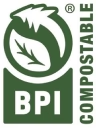
Sometimes you’ll see labels on products that say they’re “biodegradable,” “compostable,” “made from plants,” “made from corn starch” or “all natural.” However, these are not the same as BPI certified. Only items with the BPI® certification are accepted – look for the BPI® logo! When in doubt, leave it out.
Yes! All single-family and multi-family residences in eligible communities can participate. Just put your food scrap bags in your building’s trash cart or dumpster.
Food scrap bags are durable and compostable. They are thicker than typical compostable bags sold in retail stores or online. Food scrap bags are specially designed to withstand the trip in a garbage truck. Only the program-specific food scrap bags can be identified and separated from the trash. Other compostable bags will not work for this program.
Smaller bags cannot be detected by the robotic technology that separates the food scrap bags from the trash.
A complete list of items that can and cannot be put in your food scrap bags is available on the participating page. An instruction guide will be included in your food scrap bag shipment.
Pizza boxes are NOT accepted by the Food Scraps Pickup Program. They take up a lot of space in food scraps bags and are not the main material the program intends to collect.
A better solution for pizza boxes is to recycle them! Many recycling haulers will collect pizza boxes for recycling. Check with your hauler to see if they accept pizza boxes. If not, you can bring pizza boxes to a county food scraps drop-off site.
Visit the Ramsey County food scraps drop-off sites page or Washington County food scraps drop-off sites page for more information.
Food scrap bags do not need to be filled to any certain level to be separated from the trash. We recommend leaving extra room at the top of your bag to ensure it can be tied closed properly.
One way to tie the food scrap bag is like you would tie a balloon. Learn how to tie your food scrap bag like a balloon by watching this video. Another option is to tie the corners of the food scrap bag together. If you choose this way, be sure to double-knot the food scrap bag to make sure it stays sealed.
If it is difficult for you to tie the food scrap bag, consider ordering the larger (13-gallon) food scrap bags and leave more room at the top of the bag before tying. This can make it easier to tie.
Consider ordering the larger (13-gallon) food scrap bags and leave more room at the top of the bag before tying.
Put the torn food scrap bag and its contents into a new food scrap bag and put it in your trash cart or dumpster.
To prevent your food scrap bags from becoming excessively wet, consider the following:
- Place newspaper or paper towels at the bottom of your food scrap bag or container
- Freeze your food scraps as you collect them
- Change your food scrap bag at least once a week, even if it isn’t totally full
- Collect your food scraps in a bin without a bag and dump them in a food scrap bag once you’re ready to put them in your trash cart or dumpster
- Drain excess liquids from your food before placing them in your food scrap bag. Examples of food that may lead to leakage might include pasta sauces, soups or dairy products like yogurt or cottage cheese. Moisture around your food scrap bag is common and doesn’t mean your bag is broken. However, if your food scrap bag is broken, place the broken bag inside of a new food scrap bag, tie it shut, and place it in your trash cart or dumpster for collection.
If you observe a manufacturing issue with your supply of food scrap bags, please contact our customer support at 651-661-9393 or complete a contact form for assistance.
No. You must use food scrap bags provided by the Food Scraps Pickup Program. These bags are designed to hold up on the trip in a garbage truck and be detected by machinery that will separate them from the trash. Other bags sold in stores or online will not be identified for separation and may not withstand the trip in a garbage truck.
Yes, but the bags must be BPI®-certified and be put into Food Scraps Pickup Program-provided food scrap bag for collection. Bags will only be sorted from the trash if they are inside of the county-provided food scrap bags. If you purchase other bags, look for the BPI® certification logo pictured below.
No. The food scrap bags will not be identified for separation from the trash if they are inside a regular trash bag. Food scrap bags go inside your trash cart or dumpster, NOT on the lid.
Unused food scrap bags should be stored in a cool, dry location. Excess moisture and heat may damage the food scrap bags. It is recommended you use your food scrap bag supply within a year of your order date.
It is recommended you use your food scrap bag supply within a year of your order date.
Expired food scrap bags can be put in an unexpired food scrap bag and placed in your trash for collection. You can also bring expired food scrap bags to a food scraps drop-off site and place them in the food scraps dumpster.
The Food Scraps Pickup Program does not accept returns. Give your unwanted food scraps bags to a friend or community member who is eligible to participate in the program, so they can be used.
For assistance in placing an order, you can call our customer support at 651-661-9393.
If your order was not received, you can call our customer support line at 651-661-9393 to assist you with getting another order placed.
Mailing addresses cannot be changed once an order is placed. Please call our customer support line at 651-661-9393 to place a new order.
Please call our customer support line at 651-661-9393 for assistance.
To reset your password, select “Log In” from the top menu bar. Then, select “I forgot my password.” Type in the email associated with your account. A link to change your password will be sent to your email address.
You can also call our customer support line at 651-661-9393 for assistance.
We welcome your input! Please use our contact form to share your feedback.
You are eligible for up to two free orders per calendar year (Jan. 1 – Dec. 31). Each order contains 60 food scrap bags (two rolls of 30).
After using your two free orders within the calendar year, you can purchase additional food scrap bags. Prices are $28.24 + tax for a 6-gallon supply and $37.57 + tax for a 13-gallon supply (Price includes shipping, handling and payment processing. Sales tax is calculated at checkout).
No, free orders do not roll over. If you do not use your two free orders within the calendar year, you cannot use them the following year.
If you have already received your first order and need more, you can place a second free order anytime before Dec. 31 of the same year.
You can purchase additional food scrap bags through our website. Visit our Order Bags page for additional information. Prices are $28.24 + tax for a 6-gallon supply and $37.57 + tax for a 13-gallon supply (Price includes shipping, handling and payment processing. Sales tax is calculated at checkout).
Yes, you can choose between 6-gallon and 13-gallon food scrap bags when placing each order.
Unfortunately, we cannot accept returns. Please review our FAQ on bag size to see which size food scrap bag is best for your household.
Please call our customer support line at 651-661-9393 or fill out our contact form for help with additional questions.
The Food Scraps Pickup Program is a free, voluntary food scrap recycling program for Ramsey and Washington County residents. The program is rolling out to residents of Ramsey and Washington counties over multiple years and will eventually be available to all residents of the two counties. See if you are currently eligible to participate.
Food scraps are collected using special bags called “food scrap bags,” that are provided by the program. The food scrap bags are then placed in your trash cart or dumpster for collection.
After collection, the food scrap bags are separated from trash using robotic sorting technology and turned into nutrient-rich soil called “compost.”
Food scraps make up about 20% of trash by weight collected in Ramsey and Washington counties. The Food Scraps Pickup Program turns collected food scraps back into soil, rather than waste.
Food that goes uneaten wastes money and resources, and negatively impacts the environment. Outside of food scrap recycling and composting, reducing food waste is the environmentally preferred strategy for waste management. Learn more about food waste reduction.
The Food Scraps Pickup Program provides residents with program-specific bags called “food scrap bags.” With this system, food scrap bags and bags of trash all go in the same trash cart, trash chute or dumpster. Food scrap bags are a more efficient and cost-effective method of collecting food scraps from Ramsey and Washington County residents’ homes because:
- According to the counties’ analysis, a system using food scrap bags costs ten times less than a system that uses separate collection carts.
- Food scrap bags do not require additional collection days, collection carts or hauling trucks.
- Using food scrap bags instead of a separate cart system reduces the number of collection trucks on the road resulting in fewer greenhouse gas emissions.
- Food scrap bags allow all residents to participate, regardless of their housing type, city or hauler.
Your trash hauler will pick up your trash with the food scrap bags on your regular collection day.
The trash and food scrap bags are then brought to the Ramsey/Washington Recycling & Energy Center (R&E) in Newport or a transfer station, where the food scrap bags are separated from your trash by machinery that is programmed to recognize and separate the bags. Only residents in eligible communities will have their food scrap bags separated from the trash.
The food scrap bags and their contents are then sent to an industrial composting facility and turned into nutrient-rich soil called “compost.” View the “What happens after food scrap bags are collected?” video to see how the process works.
You can also learn more more about the benefits of food scrap recycling and compost on the R&E compost education page.
Food scrap bags provided by the Food Scraps Pickup Program are specifically designed for this program. These bags are different than the ones offered at county food scrap drop-off sites and those currently sold at retailers or online. The bags are about three times as thick as a grocery store plastic bag and meet special standards for strength. The counties have tested the bags in actual loads of garbage to ensure they don’t break during transit. Only the program-provided food scrap bags can be collected and separated from the trash, other compostable bags will not work for this program.
Robotic sorting technology is used to identify and separate the program-specific food scrap bags from the trash. View the “What happens after food scrap bags are collected?” video to see how the process works.
Ramsey and Washington counties are funding parts of this program with funds from the County Environmental Charge (CEC) that each county collects. This service charge is included on your waste collection bill and funds both counties’ waste programs.
At the R&E Center, tipping fees reflect the costs of processing waste at the facility. R&E uses these funds to cover the costs associated with operating the facility, including labor, equipment, transporting and marketing recyclables and refuse-derived fuel, maintenance, and insurance.
The improvements at the Ramsey/Washington Recycling & Energy Center to separate food scrap bags from the trash for composting are funded by a grant from the Minnesota Pollution Control Agency (MPCA), which was part of the 2020 Minnesota State bonding bill. Facility improvements are also funded by the fee that trash haulers pay to deliver trash to the R&E Center.
Yes. The Food Scraps Pickup Program will be one part of a larger system for collecting food scraps. You may prefer the drop-off sites or backyard composting – do what works best for you! Find more information about your county’s food scraps drop-off sites below:
Not at this time. Ramsey and Washington counties are exploring the possibility of expanding this program to businesses.
When we say “businesses” we mean private, non-profit and public businesses and organizations physically located in Ramsey or Washington County. This includes, but is not limited to, restaurants, grocery stores, catering operations, hotels, office buildings and schools.
For business recycling resources, connect with BizRecycling at BizRecycling.com, 651-768-6670 or info@BizRecycling.com
If you operate a business from a residential address, you may participate in the Food Scraps Pickup Program if it is available in that community.
You are eligible for up to two free orders per calendar year (Jan. 1 – Dec. 31). Each order contains 60 food scrap bags (two rolls of 30).
After using your two free orders within the calendar year, you can purchase additional food scrap bags. Prices are $28.24 + tax for a 6-gallon supply and $37.57 + tax for a 13-gallon supply (Price includes shipping, handling and payment processing. Sales tax is calculated at checkout).
The Food Scraps Pickup Program is a free, voluntary food scrap recycling program for Ramsey and Washington County residents. The program is rolling out to residents of Ramsey and Washington counties over multiple years and will eventually be available to all residents of the two counties. See if you are currently eligible to participate.
Food scraps are collected using special bags called “food scrap bags,” that are provided by the program. The food scrap bags are then placed in your trash cart or dumpster for collection.
After collection, the food scrap bags are separated from trash using robotic sorting technology and turned into nutrient-rich soil called “compost.”
To get started, order your free supply of food scrap bags. Sign up or call customer support at 651-661-9393 for assistance. The program-specific bags will arrive by mail with instructions on how to start collecting your food scraps.
Only residents in eligible communities can participate. See if the program is currently available in your area.
The timeline of the program rollout is determined by working closely with our facilities and partners to plan for continued expansion. The Food Scraps Pickup Program is in the process of rolling out to all Ramsey and Washington county residents, regardless of housing type, and will be available to all residents of the two counties by the end of 2027. Click here for a list of communities where the program is currently available.
The program is currently available to all communities whose trash is brought directly to the R&E Center or Walter’s Recycling & Refuse transfer station in Blaine, where food scrap bags are separated from the trash by machinery that is programmed to recognize and separate the food scrap bags. The program will become available to the remaining Ramsey County communities when equipment to sort food scrap bags from the trash is installed at the Waste Management transfer station in St. Paul. This construction will be completed by the end of 2027.
Program participation is FREE to residents of Ramsey and Washington counties. All participants can place up to two free orders of 60 food scrap bags per calendar year. Additional food scrap bags are available for purchase.
You can order them by clicking here or call 651-661-9393 (multi-lingual options available) to get started. Food scrap bags are shipped directly to your household.
You can place two free orders of 60 food scrap bags in a calendar year. For most households, we recommend using 1-2 food scrap bags per week to make the most of your free annual supply. Additional food scrap bags are available for purchase.
Food scrap bags come in two sizes:
- 6-gallon (about the size of a bathroom trash can)
- 13-gallon (about the size of a kitchen trash can)
In program testing, the smaller food scrap bag size (6-gallon) was the preferred size for most households. Consider the following factors in deciding which bag size will work best for you:
- Storage: What size container do you plan to use with the food scrap bags? The 6-gallon food scrap bags work better with smaller containers. See ideas for home set up.
- Home/kitchen size: The 6-gallon food scrap bags may work better for smaller spaces.
- Household size: Larger families may prefer the 13-gallon food scrap bags.
- Cooking frequency: If you cook a lot, you might have more food scraps and may prefer the 13-gallon food scrap bags.
No, the Food Scraps Pickup Program does not provide collection containers.
Washington County offers residents free containers for food scraps collection. If you reside in Washington County, you can sign up for a container and learn more at WashCoRecycles.com/FoodScraps.
Ramsey County residents can pick up a free food scraps collection container at scheduled distribution events. Visit ramseycountymn.gov/food-scraps to find the next event.
Multi-unit residential properties in Ramsey and Washington County are eligible for free containers for food scrap collection. Property managers can order containers for residents at their multi-unit property at bizrecycling.com/FoodScrapsKit. This project was funded in part by the MPCA.
No. All residents of Ramsey and Washington counties can participate regardless of the hauler. This program works within the current waste system, meaning there are no changes to how haulers operate or pick up trash.
There is not one correct set-up to participate in the Food Scraps Pickup Program! There are many different kinds and sizes of containers that can be used for food scrap collection. We recommend finding a container and place to keep it that works best for you. View possible storage and set up options.
Washington County offers residents free containers for food scraps collection. Sign up for your container and learn more at WashCoRecycles.com/FoodScraps.
Ramsey County residents can pick up a free food scraps collection container at scheduled distribution events. Visit ramseycountymn.gov/food-scraps to find the next event.
Multi-unit residential properties in Ramsey and Washington County are eligible for free containers for food scrap collection. Property managers can order containers for residents at their multi-unit property at bizrecycling.com/FoodScrapsKit. This project was funded in part by the MPCA.
Using food scrap bags is just a different way of collecting the same material that’s currently going in your trash. Like your trash, if you take your food scrap bags out to your garbage cart or dumpster regularly, odors should not be an issue.
Just like when food scraps are in your regular trash bin, over time they can begin to smell or attract pests— this is a very normal experience! Finding solutions to address these issues can require some creative problem-solving. Here are some ideas for where to start:
- Consider storing your food scraps somewhere new, like in the fridge or freezer, in your garage or under your sink!
- Consider finding a storage container with a lid to help prevent smells or pests.
- Try taking your food scrap bags out more frequently. We recommend taking your food scrap bags out at least once a week. You don’t always need to wait until the bag is full!
No. Compost derived from the material collected by the Food Scraps Pickup Program will not be provided to participants.
Yes. If you are a Safe at Home participant, please contact customer support at 651-661-9393 and ask to leave a message for program staff to assist you. You will be contacted by a staff member who will help you create an account and order bags. To participate, you must live in one of the eligible communities.
We only accept compostable products certified by the Biodegradable Products Institute (BPI). BPI® is a third-party company that certifies that products have been tested and will fully break down at a commercial compost facility. Items like cups, plates, utensils and more can be BPI® certified.
Sometimes you’ll see labels on products that say they’re “biodegradable,” “compostable,” “made from plants,” “made from corn starch” or “all natural.” However, these are not the same as BPI certified. Only items with the BPI® certification are accepted – look for the BPI® logo! When in doubt, leave it out.
Yes! All single-family and multi-family residences in eligible communities can participate. Just put your food scrap bags in your building’s trash cart or dumpster.
After using your two free orders within the calendar year, you can purchase additional food scrap bags. Prices are $28.24 + tax for a 6-gallon supply and $37.57 + tax for a 13-gallon supply (Price includes shipping, handling and payment processing. Sales tax is calculated at checkout).
No, free orders do not roll over. If you do not use your two free orders within the calendar year, you cannot use them the following year.
If you have already received your first order and need more, you can place a second free order anytime before Dec. 31 of the same year.
Yes, you can choose between 6-gallon and 13-gallon food scrap bags when placing each order.
Unfortunately, we cannot accept returns. Please review our FAQ on bag size to see which size food scrap bag is best for your household.
There is not one correct set-up to participate in the Food Scraps Pickup Program! There are many different kinds and sizes of containers that can be used for food scrap collection. We recommend finding a container and place to keep it that works best for you. View possible storage and set up options.
Washington County offers residents free containers for food scraps collection. Sign up for your container and learn more at WashCoRecycles.com/FoodScraps.
Ramsey County residents can pick up a free food scraps collection container at scheduled distribution events. Visit ramseycountymn.gov/food-scraps to find the next event.
Multi-unit residential properties in Ramsey and Washington County are eligible for free containers for food scrap collection. Property managers can order containers for residents at their multi-unit property at bizrecycling.com/FoodScrapsKit. This project was funded in part by the MPCA.
Using food scrap bags is just a different way of collecting the same material that’s currently going in your trash. Like your trash, if you take your food scrap bags out to your garbage cart or dumpster regularly, odors should not be an issue.
Just like when food scraps are in your regular trash bin, over time they can begin to smell or attract pests— this is a very normal experience! Finding solutions to address these issues can require some creative problem-solving. Here are some ideas for where to start:
- Consider storing your food scraps somewhere new, like in the fridge or freezer, in your garage or under your sink!
- Consider finding a storage container with a lid to help prevent smells or pests.
- Try taking your food scrap bags out more frequently. We recommend taking your food scrap bags out at least once a week. You don’t always need to wait until the bag is full!
We only accept compostable products certified by the Biodegradable Products Institute (BPI). BPI® is a third-party company that certifies that products have been tested and will fully break down at a commercial compost facility. Items like cups, plates, utensils and more can be BPI® certified.
Sometimes you’ll see labels on products that say they’re “biodegradable,” “compostable,” “made from plants,” “made from corn starch” or “all natural.” However, these are not the same as BPI certified. Only items with the BPI® certification are accepted – look for the BPI® logo! When in doubt, leave it out.
A complete list of items that can and cannot be put in your food scrap bags is available on the participating page. An instruction guide will be included in your food scrap bag shipment.
Food scrap bags do not need to be filled to any certain level to be separated from the trash. We recommend leaving extra room at the top of your bag to ensure it can be tied closed properly.
To prevent your food scrap bags from becoming excessively wet, consider the following:
- Place newspaper or paper towels at the bottom of your food scrap bag or container
- Freeze your food scraps as you collect them
- Change your food scrap bag at least once a week, even if it isn’t totally full
- Collect your food scraps in a bin without a bag and dump them in a food scrap bag once you’re ready to put them in your trash cart or dumpster
- Drain excess liquids from your food before placing them in your food scrap bag. Examples of food that may lead to leakage might include pasta sauces, soups or dairy products like yogurt or cottage cheese. Moisture around your food scrap bag is common and doesn’t mean your bag is broken. However, if your food scrap bag is broken, place the broken bag inside of a new food scrap bag, tie it shut, and place it in your trash cart or dumpster for collection.
If you observe a manufacturing issue with your supply of food scrap bags, please contact our customer support at 651-661-9393 or complete a contact form for assistance.
Unused food scrap bags should be stored in a cool, dry location. Excess moisture and heat may damage the food scrap bags. It is recommended you use your food scrap bag supply within a year of your order date.
It is recommended you use your food scrap bag supply within a year of your order date.
Expired food scrap bags can be put in an unexpired food scrap bag and placed in your trash for collection. You can also bring expired food scrap bags to a food scraps drop-off site and place them in the food scraps dumpster.
The Food Scraps Pickup Program does not accept returns. Give your unwanted food scraps bags to a friend or community member who is eligible to participate in the program, so they can be used.
Food scrap bags are durable and compostable. They are thicker than typical compostable bags sold in retail stores or online. Food scrap bags are specially designed to withstand the trip in a garbage truck. Only the program-specific food scrap bags can be identified and separated from the trash. Other compostable bags will not work for this program.
Smaller bags cannot be detected by the robotic technology that separates the food scrap bags from the trash.
A complete list of items that can and cannot be put in your food scrap bags is available on the participating page. An instruction guide will be included in your food scrap bag shipment.
Pizza boxes are NOT accepted by the Food Scraps Pickup Program. They take up a lot of space in food scraps bags and are not the main material the program intends to collect.
A better solution for pizza boxes is to recycle them! Many recycling haulers will collect pizza boxes for recycling. Check with your hauler to see if they accept pizza boxes. If not, you can bring pizza boxes to a county food scraps drop-off site.
Visit the Ramsey County food scraps drop-off sites page or Washington County food scraps drop-off sites page for more information.
Food scrap bags do not need to be filled to any certain level to be separated from the trash. We recommend leaving extra room at the top of your bag to ensure it can be tied closed properly.
One way to tie the food scrap bag is like you would tie a balloon. Learn how to tie your food scrap bag like a balloon by watching this video. Another option is to tie the corners of the food scrap bag together. If you choose this way, be sure to double-knot the food scrap bag to make sure it stays sealed.
If it is difficult for you to tie the food scrap bag, consider ordering the larger (13-gallon) food scrap bags and leave more room at the top of the bag before tying. This can make it easier to tie.
Consider ordering the larger (13-gallon) food scrap bags and leave more room at the top of the bag before tying.
Put the torn food scrap bag and its contents into a new food scrap bag and put it in your trash cart or dumpster.
To prevent your food scrap bags from becoming excessively wet, consider the following:
- Place newspaper or paper towels at the bottom of your food scrap bag or container
- Freeze your food scraps as you collect them
- Change your food scrap bag at least once a week, even if it isn’t totally full
- Collect your food scraps in a bin without a bag and dump them in a food scrap bag once you’re ready to put them in your trash cart or dumpster
- Drain excess liquids from your food before placing them in your food scrap bag. Examples of food that may lead to leakage might include pasta sauces, soups or dairy products like yogurt or cottage cheese. Moisture around your food scrap bag is common and doesn’t mean your bag is broken. However, if your food scrap bag is broken, place the broken bag inside of a new food scrap bag, tie it shut, and place it in your trash cart or dumpster for collection.
If you observe a manufacturing issue with your supply of food scrap bags, please contact our customer support at 651-661-9393 or complete a contact form for assistance.
No. You must use food scrap bags provided by the Food Scraps Pickup Program. These bags are designed to hold up on the trip in a garbage truck and be detected by machinery that will separate them from the trash. Other bags sold in stores or online will not be identified for separation and may not withstand the trip in a garbage truck.
Yes, but the bags must be BPI®-certified and be put into Food Scraps Pickup Program-provided food scrap bag for collection. Bags will only be sorted from the trash if they are inside of the county-provided food scrap bags. If you purchase other bags, look for the BPI® certification logo pictured below.
No. The food scrap bags will not be identified for separation from the trash if they are inside a regular trash bag. Food scrap bags go inside your trash cart or dumpster, NOT on the lid.
Unused food scrap bags should be stored in a cool, dry location. Excess moisture and heat may damage the food scrap bags. It is recommended you use your food scrap bag supply within a year of your order date.
It is recommended you use your food scrap bag supply within a year of your order date.
Expired food scrap bags can be put in an unexpired food scrap bag and placed in your trash for collection. You can also bring expired food scrap bags to a food scraps drop-off site and place them in the food scraps dumpster.
The Food Scraps Pickup Program does not accept returns. Give your unwanted food scraps bags to a friend or community member who is eligible to participate in the program, so they can be used.
You are eligible for up to two free orders per calendar year (Jan. 1 – Dec. 31). Each order contains 60 food scrap bags (two rolls of 30).
After using your two free orders within the calendar year, you can purchase additional food scrap bags. Prices are $28.24 + tax for a 6-gallon supply and $37.57 + tax for a 13-gallon supply (Price includes shipping, handling and payment processing. Sales tax is calculated at checkout).
If you have already received your first order and need more, you can place a second free order anytime before Dec. 31 of the same year.
You can purchase additional food scrap bags through our website. Visit our Order Bags page for additional information. Prices are $28.24 + tax for a 6-gallon supply and $37.57 + tax for a 13-gallon supply (Price includes shipping, handling and payment processing. Sales tax is calculated at checkout).
Yes, you can choose between 6-gallon and 13-gallon food scrap bags when placing each order.
Unfortunately, we cannot accept returns. Please review our FAQ on bag size to see which size food scrap bag is best for your household.
For assistance in placing an order, you can call our customer support at 651-661-9393.
If your order was not received, you can call our customer support line at 651-661-9393 to assist you with getting another order placed.
Mailing addresses cannot be changed once an order is placed. Please call our customer support line at 651-661-9393 to place a new order.
Please call our customer support line at 651-661-9393 for assistance.
To reset your password, select “Log In” from the top menu bar. Then, select “I forgot my password.” Type in the email associated with your account. A link to change your password will be sent to your email address.
You can also call our customer support line at 651-661-9393 for assistance.
No, free orders do not roll over. If you do not use your two free orders within the calendar year, you cannot use them the following year.
If you have already received your first order and need more, you can place a second free order anytime before Dec. 31 of the same year.
You can purchase additional food scrap bags through our website. Visit our Order Bags page for additional information. Prices are $28.24 + tax for a 6-gallon supply and $37.57 + tax for a 13-gallon supply (Price includes shipping, handling and payment processing. Sales tax is calculated at checkout).
Yes, you can choose between 6-gallon and 13-gallon food scrap bags when placing each order.
We welcome your input! Please use our contact form to share your feedback.
Please call our customer support line at 651-661-9393 or fill out our contact form for help with additional questions.